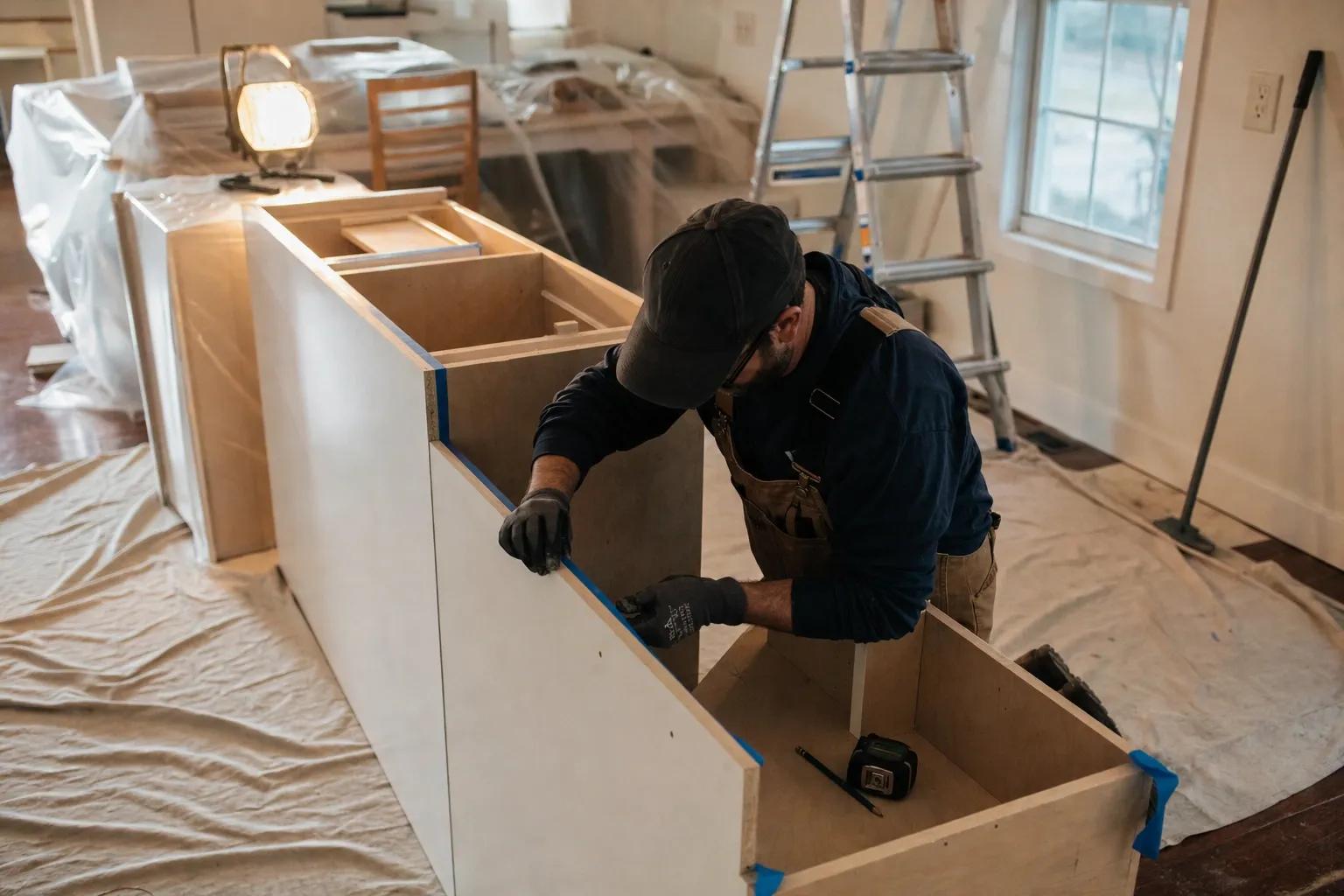
What Cabinet Installation Actually Costs Around Seattle
Most Seattle-area homeowners ask about cabinet installation cost after they've already picked out the cabinets. That's backwards. The purchase price and the labor cost are two separate budgets, and confusing them is how projects go sideways before the first cabinet hits the wall.
Labor for a standard kitchen cabinet run in the Seattle area varies considerably, from a few hundred dollars for a small galley kitchen with stock units to several thousand for a full kitchen gut with custom cabinetry and complex layout. Material costs sit on top of that, and they vary just as much. Getting a firm number requires a site visit, not a web search.
For a broader look at how the whole project budget comes together, see our full kitchen remodel cost guide for Seattle homeowners.
Stock vs. Semi-Custom vs. Custom Cabinets
Stock cabinets come in fixed sizes, usually in 3-inch width increments, and ship from a big-box store like Home Depot or Lowe's. They're the most affordable option and available quickly. Semi-custom cabinets come from a cabinet shop or specialty retailer; you choose the dimensions, wood species, and finish within the manufacturer's range. Custom cabinets are built to your exact specs by a local shop.
The installation labor difference between these three tiers is real. Stock cabinets often require more filler strips to close gaps at walls and corners because the fixed sizes rarely match your kitchen perfectly. Semi-custom and custom units fit tighter out of the box, which can save time on the scribing and shimming side. But custom jobs sometimes require extra coordination between the installer and the cabinet shop if something arrives wrong.
Labor Costs vs. Material Costs: How They Split
On a typical kitchen cabinet installation, labor runs roughly 25 to 40 percent of the total project cost. The rest is materials, meaning the cabinets themselves, hardware, and any trim pieces. A 10-cabinet kitchen installs faster than a 20-cabinet full remodel. That sounds obvious, but the relationship isn't perfectly linear; layout complexity and wall conditions matter as much as cabinet count.
| Cabinet Type | Typical Material Cost Range | Installation Complexity | Best For |
|---|---|---|---|
| Stock (big-box) | Lower end | Moderate (filler strips often needed) | Budget remodels, rentals |
| Semi-Custom | Mid range | Moderate to low (better fit) | Most Seattle homeowners |
| Custom | Higher end | Lower (built to spec) but coordination-heavy | High-end kitchens, unusual layouts |
The Biggest Factors That Move the Price
Understanding new kitchen cabinet installation price means understanding what actually drives labor time. It's rarely the cabinet count alone.
Cabinet Type and Where You Buy Them
Stock cabinets from a big-box store cost less upfront but often need more labor to fit correctly. An installer may spend an hour cutting and fitting filler strips that a semi-custom cabinet wouldn't need. Factor that time into your budget before you decide the cheap cabinets are the better deal.
Kitchen Size and Layout Complexity
A straight galley run is the simplest layout to install. L-shaped and U-shaped kitchens add corner cabinet situations, which require blind corner or lazy-Susan units and more precise measurement. Islands add a freestanding run that has to be leveled independently. Each of these details adds time.
Demolition and Disposal of Old Cabinets
Removing existing cabinets is usually priced separately from installation. Old cabinets get pried off the wall, and the fasteners often pull chunks of drywall with them. That damaged drywall needs patching before new cabinets go up. Budget for demo, disposal, and patch work as line items, not as something automatically included in the install quote.
Structural Surprises in Older Homes
Seattle's craftsman bungalows and mid-century homes are full of character. They're also full of walls that aren't plumb, floors that aren't level, and corners that aren't square. That's not a complaint; it's just what happens to a house that's been settling in Pacific Northwest soil for 80 years. An installer working in a 1925 Wallingford bungalow will spend more time shimming and scribing than one working in a 2010 Sammamish build.
Shimming means sliding thin wedges of material under base cabinets to get them level when the floor isn't. Scribing means cutting the side panel of a cabinet to follow the contour of an irregular wall, so there's no gap. Both take skill and time.
If your remodel involves moving a sink or adding an outlet inside a cabinet, plumbing and electrical rough-in needs to happen before cabinet day. Work that touches those systems may require a permit from Seattle DCI, King County, or your local jurisdiction. WA L&I requires contractors doing this work to be registered; you can verify any contractor's registration through the L&I lookup tool. For guidance on navigating the hiring process, see how to hire a contractor in Seattle.
What the Installation Process Actually Involves
Homeowners who understand the sequence are better prepared for why the job takes the time it does. Cabinet installation isn't just hanging boxes on a wall.
Measuring, Leveling, and Laying Out the Run
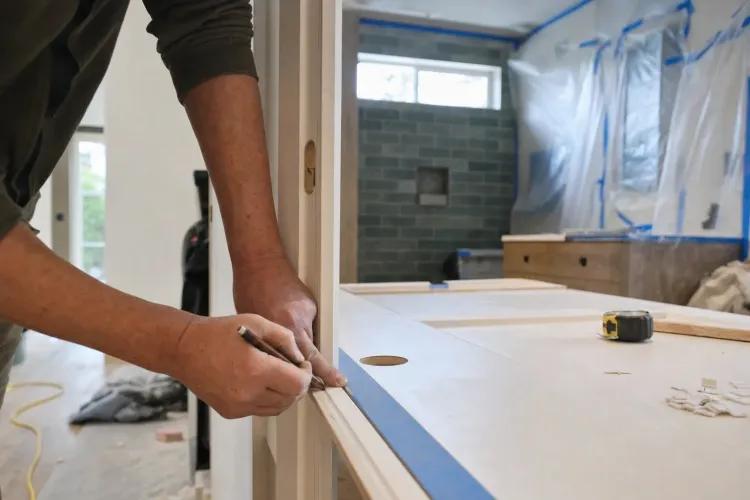
Before a single cabinet goes up, the installer finds the high point of the floor and snaps level lines on the wall. Those lines are the reference for every cabinet in the kitchen. Get this step wrong and nothing lines up at the end.
Hanging Upper Cabinets First
Upper cabinets always go in before base cabinets. The reason is simple: if base cabinets are already in place, you're leaning over them to hang the uppers, which is awkward, slower, and harder on the wall. With an open floor, you can stand close to the wall and work cleanly. A ledger board, basically a temporary horizontal brace screwed to the wall, holds the upper cabinets in position while they're fastened through the back rail into the studs.
Setting Base Cabinets and Scribing to the Wall
Base cabinets go in next, shimmed up from the floor to match the level line. Each cabinet gets fastened to the wall studs and face-screwed to its neighbor. When a base cabinet sits against a wall that isn't perfectly flat, the installer scribes (traces) the wall's contour onto the cabinet side panel, then cuts along that line with a jigsaw. The result is a tight fit with no visible gap.
Doors, Drawers, and Hardware Adjustment
This last phase takes longer than most people expect. European-style concealed hinges have three adjustment axes: up-down, side-to-side, and in-out. Getting every door to sit flush and gap-even with its neighbor requires patience and a good eye. Drawer slides get adjusted the same way. This step is what separates a kitchen that looks professionally done from one that looks like a weekend project.
DIY Installation vs. Hiring Our Team
Cabinet installation looks approachable until you're 45 minutes in and the third upper cabinet won't line up with the second. Out-of-level installs cause doors that won't close and drawers that rack. Fixing that after the fact means removing and rehinging, which adds time you could have spent getting it right once.
A cabinet run is only as good as the level line it started from. Take an extra 20 minutes at layout, and you'll save hours of adjustment at the end.
That said, not every cabinet job needs a pro. Here's an honest comparison:
| Factor | DIY | Hiring Handyman ST |
|---|---|---|
| Skill required | Moderate to high; leveling, scribing, and stud-finding are skills that take practice | Handled; we bring the tools and the know-how |
| Time investment | 3-5 days for a full kitchen run, longer with complications | 1-3 days depending on kitchen size |
| Risk of error | Higher; out-of-level cabinets are hard to fix after countertops go in | Lower; we've seen what Seattle walls throw at you |
| Finish quality | Variable; door alignment takes practice | Consistent; door and drawer adjustment is part of the job |
| When it makes sense | Single pantry cabinet, one upper unit, simple replacement | Full kitchen runs, complex layouts, older homes |
If you're weighing whether to keep your existing boxes and just update the look, the cabinet refacing vs. Full replacement guide walks through that decision in detail.
How Handyman ST Handles Cabinet Installation in the Seattle Area
We handle the carpentry side of kitchen remodels: cabinet installation, light framing, trim work, and painting. For a full picture of what that includes, see our kitchen and bathroom remodel services page, or the more specific overview of kitchen remodel work we do in Seattle.
One thing we're consistent about in the Pacific Northwest: cabinets need time to acclimate before installation. Wood expands and contracts with humidity. Bring a pallet of cabinets from a warehouse in Auburn into a heated Seattle kitchen and the wood will adjust to the new moisture level over 48 hours or so. Install them the same day they're delivered and you may see gaps or binding drawers within a few weeks. We tell every homeowner this upfront, and we build it into the schedule.
We work across King and Pierce counties. The older craftsman stock in Tacoma and Renton tends to need more shimming and wall patching than the newer builds in Sammamish or Bonney Lake. Homes in Puyallup and Bellevue each have their own quirks. We factor local housing stock into the estimate, not just the cabinet count.
How to Prepare Before We Arrive
Good prep on your end shortens the job and reduces surprises. Here's what to have in order before cabinet installation day:
- Acclimate the cabinets. Have them delivered and sitting in the kitchen space at least 48 hours before install. This is especially important in the wet months from October through May.
- Clear the kitchen. Remove appliances, clear countertops, and pull everything out of existing cabinets if demo is happening the same day.
- Confirm rough-in is done. Any plumbing or electrical work inside cabinet walls needs to be roughed in and inspected before the cabinets go up. Once the boxes are on the wall, access is gone.
- Check permit requirements. Replacing cabinets in the same footprint usually doesn't trigger a permit in Seattle or King County. Moving a sink drain or adding a circuit does. Check with your local jurisdiction before work starts.
- Verify your contractor is registered. WA L&I requires registration for contractors doing this type of work. Confirm registration before signing anything.
It also helps to have your cabinet hardware, pulls, and knobs on hand before we arrive. Waiting on a hardware order that's stuck in shipping is a common reason jobs stall at the finish line.
- Pulls and knobs: confirm quantities and hole-boring specs with your cabinet supplier before ordering
- Soft-close hinges: if they didn't come pre-installed, have them ready
- Filler strips and crown molding: order these at the same time as the cabinets, not after
Frequently Asked Questions
How much does it cost to install kitchen cabinets in Seattle?
Cabinet installation labor cost in Seattle varies based on kitchen size, cabinet type, and wall conditions. A standard kitchen can run several hundred to a few thousand dollars in labor alone. Material costs for the cabinets are separate and depend on whether you choose stock, semi-custom, or custom units. Get a site visit for an accurate number.
Does cabinet installation include removing the old cabinets?
Not automatically. Demo and disposal of existing cabinets is usually priced as a separate line item. Old cabinets get pried off the wall, and fasteners often pull drywall with them. That patching adds time and cost. Ask your contractor to itemize demo and disposal so you're not surprised on the final invoice.
How long does kitchen cabinet installation take?
A full kitchen cabinet run typically takes one to three days for an experienced crew, depending on cabinet count, layout complexity, and how level the walls and floors are. Older Seattle-area homes, particularly craftsman bungalows in neighborhoods like Wallingford or Tacoma's north end, often need extra scribing and shimming time that extends the job.
Do I need a permit to replace kitchen cabinets in Seattle?
Replacing cabinets in the same footprint usually doesn't require a permit in Seattle or King County. But if the remodel involves moving plumbing, adding electrical circuits, or changing the layout, a permit is likely needed. Check with Seattle's Department of Construction and Inspections or your local jurisdiction before starting work.
Should I buy cabinets before hiring a contractor?
Coordinate with your contractor before ordering. Cabinet dimensions need to match your exact wall measurements, and the installer should verify those before you commit. Ordering first and discovering a sizing mismatch can mean restocking fees and delays. Most contractors will confirm specs during an initial site visit, which is worth scheduling early.