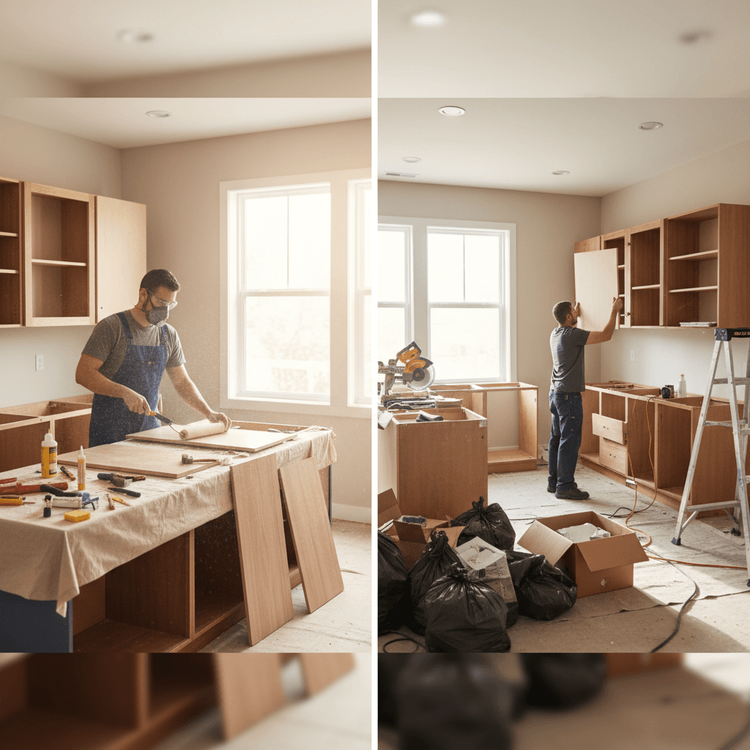

When Seattle homeowners face worn cabinets, faded finishes, or outdated hardware, the big question emerges: repair or replace? This decision impacts both your budget and your daily life for years to come. With Seattle's competitive real estate market and the growing trend toward kitchen renovations, understanding your options is crucial for making the right investment in your home.
Whether you're dealing with water damage from Seattle's notorious rain, wear from daily use, or simply wanting to update your kitchen's aesthetic, this comprehensive guide will help you navigate the kitchen cabinet repair versus replacement decision. We'll explore costs, timelines, and practical considerations specific to the Pacific Northwest climate and Seattle-area housing market.
Understanding Your Current Cabinet Situation
Before diving into repair versus replacement, you need to honestly assess your existing cabinets. The age, construction quality, and current condition all play vital roles in determining the most cost-effective path forward.
Cabinet Construction Assessment:
- Solid wood cabinets (typically 20+ years old): Often excellent candidates for repair and refinishing
- Plywood boxes with solid wood doors: Usually worth repairing if the structure is sound
- Particle board or MDF construction: May have limited repair potential, especially if water damage is present
- Thermofoil or laminate: Difficult to refinish but hardware and structural repairs may extend their life
Common Issues to Evaluate: Start by examining your cabinets systematically. Check for loose hinges, which are often simple fixes requiring only screwdriver adjustments or new hardware. Look for water damage, particularly around sinks and dishwashers – this is especially common in Seattle homes due to our humid climate. Assess drawer slides for smooth operation, inspect door alignment, and note any scratches, dents, or finish deterioration.
The layout functionality deserves special attention. Consider whether your current configuration meets your cooking and storage needs. Sometimes what feels like a cabinet problem is actually a layout issue that requires more comprehensive kitchen renovation Seattle planning.
When Kitchen Cabinet Repair Makes Sense
Kitchen cabinet repair Seattle projects often provide excellent value when the underlying structure remains solid. Repair typically costs 25-40% of full replacement while extending cabinet life by 10-15 years.
Ideal Repair Scenarios: Repair makes the most sense when dealing with cosmetic issues like scratched or faded finishes, loose or outdated hardware, minor water damage that hasn't compromised structural integrity, or doors that don't close properly due to loose hinges.
Step-by-Step Cabinet Repair Process:
Assessment and Planning (Day 1): Remove all items and thoroughly clean cabinets. Document issues with photos and create a prioritized repair list. Measure for new hardware if updates are desired.
Hardware Repairs (Days 2-3): Replace worn hinges, starting by removing old hardware and filling oversized screw holes with wood filler. Install new hinges, ensuring proper alignment. Update drawer slides by removing old tracks, cleaning mounting areas, and installing new full-extension slides for improved functionality.
Surface Restoration (Days 4-7): For minor scratches, sand lightly with 220-grit sandpaper and apply matching wood stain or touch-up marker. Deeper damage may require wood filler, sanding, and spot refinishing. Complete refinishing involves stripping old finish, sanding progressively from 120 to 220-grit, applying stain if desired, and finishing with polyurethane for durability.
Professional vs DIY Repair Considerations: Simple hardware updates and minor touch-ups work well as DIY projects. However, complete refinishing requires proper ventilation, dust control, and spray equipment for best results. Seattle's climate creates additional challenges – humidity affects drying times, and proper workspace setup becomes crucial during our rainy months.
When Cabinet Replacement is the Better Choice
Cabinet replacement cost considerations often reveal that replacement provides better long-term value in specific situations. While initial investment is higher, replacement offers opportunities for improved functionality, updated aesthetics, and potential home value increases.
Clear Replacement Indicators: Replace when dealing with extensive water damage, structural issues like sagging shelves or loose joints, outdated layouts that don't meet current needs, or when cabinet style severely dates your kitchen. Additionally, if repair costs exceed 50% of replacement cost, replacement typically offers better value.
Replacement Timeline and Process:
Planning Phase (Weeks 1-2): Measure existing space and create detailed drawings. Research cabinet styles, materials, and features that match your needs and budget. Order cabinets – lead times in Seattle area typically range from 6-12 weeks for semi-custom options.
Demolition and Prep (Days 1-2): Remove old cabinets carefully to avoid damage to walls, floors, and plumbing. Address any electrical or plumbing modifications needed. Repair and paint walls before installation.
Installation Process (Days 3-5): Install upper cabinets first, ensuring level installation across uneven walls (common in older Seattle homes). Mount lower cabinets, checking for level and proper spacing. Install drawer boxes, doors, and hardware. Complete with trim installation and final adjustments.
Material Considerations for Seattle Climate: Our Pacific Northwest humidity requires attention to cabinet materials. Solid wood handles moisture changes well but requires proper finishing. Plywood construction offers excellent stability and moisture resistance. Avoid particle board in areas prone to moisture exposure.
Cost Analysis: Seattle Market Considerations
Understanding cabinet replacement cost versus repair expenses helps guide your decision. Seattle's higher labor costs and material expenses affect both options, but proportionally impact differs.
Repair Cost Breakdown: Minor repairs (hardware, touch-ups) typically range from $200-800 for average kitchens. Moderate repairs (door replacement, partial refinishing) cost $800-2,500. Major repairs (complete refinishing, structural work) run $1,500-4,000.
Replacement Cost Factors: Budget cabinet replacement starts around $8,000-15,000 for average Seattle kitchens. Mid-range options typically cost $15,000-30,000. High-end replacements can exceed $40,000. These figures include materials and professional installation but may not cover electrical, plumbing, or structural modifications.
Hidden Costs to Consider: Both repair and replacement projects may uncover unexpected issues. Water damage behind cabinets is common in Seattle homes. Electrical updates may be needed for new lighting or outlets. Flooring transitions often require attention when cabinet footprints change.
ROI Considerations: Kitchen renovations typically return 60-70% of investment in Seattle's market. Quality repairs provide excellent ROI for homeowners planning to stay long-term, while replacement may be worthwhile for those preparing to sell or wanting to maximize home value.
Seattle-Specific Considerations
Our unique Pacific Northwest environment creates specific challenges and opportunities for kitchen projects. Understanding these factors helps ensure project success regardless of your repair or replacement choice.
Climate Impact: Seattle's humidity levels affect both materials and timelines. Plan finishing work during drier months (July-September) when possible. Ensure proper ventilation during any refinishing work. Choose materials and finishes designed for moderate humidity environments.
Local Building Considerations: Many Seattle homes feature unique architectural elements that affect cabinet projects. Older homes may have non-standard dimensions requiring custom solutions. Craftsman and Tudor styles popular in our area may benefit from period-appropriate hardware and finishes.
Seasonal Planning: Schedule major projects during dry months to allow for proper ventilation and curing. Consider that contractors are typically busiest during summer months – book well in advance. Winter projects are possible but require careful moisture management.
Permit and Code Issues: Most cabinet repair and replacement projects don't require permits, but electrical or plumbing modifications might. Structural changes definitely need permits and inspections. Check with local authorities in your specific area – requirements can vary between Seattle, Bellevue, Redmond, and other Eastside communities.
Making the Right Choice for Your Home
The repair versus replacement decision ultimately depends on your specific situation, budget, timeline, and long-term plans. Consider these final factors to guide your choice.
Decision Framework: If your cabinets are structurally sound, you plan to stay in your home long-term, and budget is a primary concern, repair often provides excellent value. Choose replacement when dealing with functional limitations, significant structural issues, or when preparing your home for sale.
Professional Consultation Value: Experienced contractors can identify issues you might miss and provide accurate cost estimates for both options. They understand local building requirements and can suggest solutions that work well in Seattle's climate.
Timeline Considerations: Repairs typically take 3-7 days depending on scope. Replacement projects take 2-3 weeks from demolition to completion, plus lead time for cabinet ordering. Consider your family's ability to function with limited kitchen access during the project.
Professional Services Across the Greater Seattle Area
Whether you choose repair or replacement, working with experienced local professionals ensures quality results that stand up to our Pacific Northwest climate. Professional assessment can often reveal cost-effective solutions that aren't immediately obvious to homeowners.
Service Area Coverage: Quality kitchen cabinet services are available throughout the greater Seattle area, including specialized expertise in Redmond's newer construction, experience with Bellevue's diverse housing stock, knowledge of Sammamish's custom homes, familiarity with Issaquah's varied architectural styles, understanding of Renton's mix of older and newer properties, and expertise in Maple Valley's suburban home layouts.
Why Professional Assessment Matters: Experienced contractors understand how Seattle's climate affects different cabinet materials and can identify potential issues before they become expensive problems. They're familiar with local supplier networks and can often source materials more cost-effectively than homeowners. Professional installation ensures proper fit and finish, especially important in older Seattle homes with non-standard dimensions.
Conclusion
Choosing between kitchen cabinet repair and replacement doesn't have to be overwhelming. By carefully assessing your current cabinets, understanding your budget and timeline, and considering your long-term plans, you can make a decision that serves your family well for years to come.
Remember that both repair and replacement can provide excellent value when done properly. The key is matching the solution to your specific situation and ensuring quality workmanship that stands up to Seattle's unique environment.
Ready to explore your kitchen cabinet options? Whether you're leaning toward repair or replacement, getting a professional assessment is the best first step. Contact Stanis LLC Handyman & General Contractor at contact@handymanst.com for expert evaluation and personalized recommendations for your Seattle-area home. Our experienced team serves homeowners throughout Seattle, Eastside communities, and surrounding areas with quality craftsmanship and honest advice tailored to your specific needs and budget.