Ask homeowners who have remodeled a bathroom what surprised them most, and the answer is rarely the tile. It is almost always the labor. Understanding the labor cost for a bathroom remodel is the most useful budgeting work you can do before committing to a project, because in the Seattle area labor typically absorbs half or more of the total price. Whether you are refreshing a powder room in Bellevue or reworking a dated master bath in Redmond, this guide breaks down where the labor dollars actually go, why Seattle rates run high, which permits you will need, and how to plan a realistic bathroom remodel timeline. It comes from the team at Stanis LLC, a Washington-licensed general contractor and handyman company serving homeowners across King County.
Labor Cost for a Bathroom Remodel: How the Numbers Break Down
Across the remodeling industry, labor typically accounts for 40 to 60 percent of a bathroom project's total price, with the balance going to materials, fixtures, and permit fees. Treat that split as a market rule of thumb, not a law. A design-heavy project with imported tile shifts the ratio toward materials, while a layout change that relocates plumbing shifts it heavily toward labor.
Applied to Seattle-market estimates, the math looks like this:
- Budget refresh ($5,000 to $10,000 market estimate): new vanity, toilet, faucet, paint, and accessories. The labor share often lands between $2,500 and $6,000.
- Mid-range remodel ($15,000 to $30,000 market estimate): new tile, tub or shower, vanity, and lighting. The labor share commonly runs $7,000 to $18,000.
- High-end remodel ($35,000 to $60,000+ market estimate): custom cabinetry, premium tile, and layout changes. Labor alone can pass $20,000.
These are planning figures for the Seattle metro, not quotes. Every bathroom is different, and older homes in Renton or Seattle's early-1900s neighborhoods routinely hide surprises behind the walls, which is why a contingency fund of 20 to 30 percent of your budget is standard advice here.
Why does Seattle labor run higher than in most markets? Three reasons come up on nearly every project. Sustained construction demand keeps skilled trades booked months out. The region's cost of living pushes wages up across every trade. And Washington's licensing, bonding, and insurance requirements add legitimate overhead that reputable companies build into their rates. The upside is a deep pool of experienced, accountable professionals. The tradeoff is that you pay professional prices.
Bathroom Remodeling Labor Cost by Project Phase
Looking at bathroom remodeling labor cost phase by phase makes contractor bids far easier to compare. Here is where the hours go on a typical full remodel, with broad Seattle-market estimates for each stage:
Demolition and disposal (1 to 3 days). Tearing out fixtures, tile, and flooring is straightforward but physical, and King County disposal fees add up. Expect roughly $1,000 to $2,500 in labor for a full gut.
Rough plumbing (1 to 3 days). Relocating a drain or supply line is some of the most expensive labor in the entire project. This is specialty-trade territory: a general contractor schedules licensed plumbers for rough-in work rather than improvising it, which is exactly how we run projects at Stanis LLC. Keeping fixtures in their existing locations is the single biggest labor saver available to you.
Rough electrical (1 to 2 days). New circuits, exhaust fan wiring, and heated floor systems are installed by licensed electricians and inspected before the walls close up.
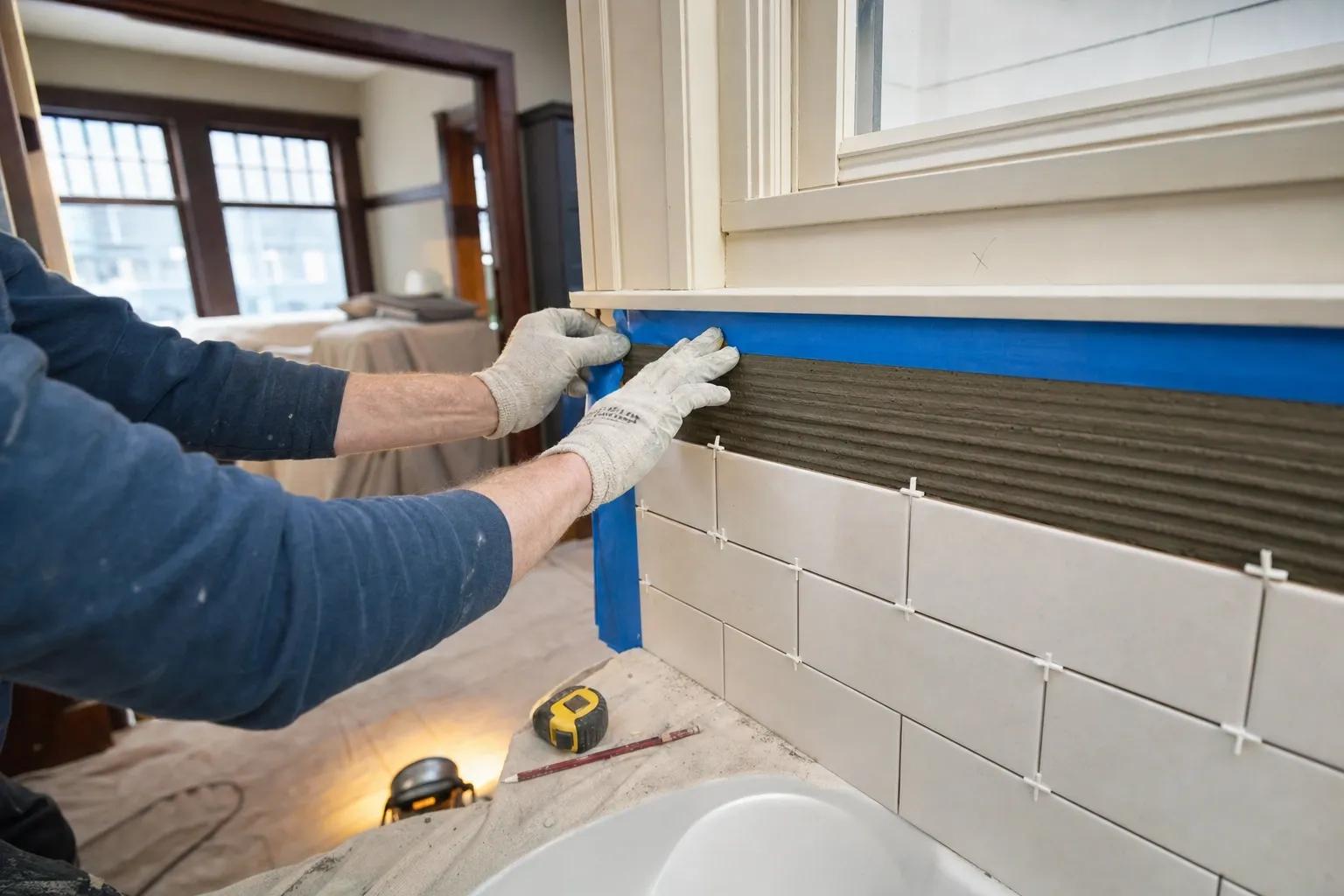
Waterproofing and tile (3 to 7 days). Tile setting is the most labor-intensive finish work in the room. Proper waterproofing behind wet areas is slow, deliberate work, and mosaic patterns or natural stone can double the hours compared with large-format porcelain.
Drywall, paint, and finish carpentry (2 to 4 days). Patching, taping, priming, and painting move quickly in capable hands but suffer badly when rushed.
Fixture installation and trim-out (1 to 3 days). Setting the toilet, vanity, faucets, lighting, mirrors, and hardware brings the room back to life and closes out the punch list.
If one bid comes in dramatically lower than the rest, ask which of these phases it shortcuts. The labor cost for a bathroom remodel is difficult to compress honestly. Bids far under market usually skip waterproofing steps, inspections, or both.
Labor Cost for a Small Bathroom Remodel
There is good news for owners of powder rooms and compact baths: the labor cost for a small bathroom remodel drops sharply when the layout stays put. Less floor area means fewer tile-setting hours, a smaller paint scope, and a faster trim-out, and a single skilled tradesperson can often handle most of the finish work.
At Stanis LLC, our bathroom pricing is deliberately simple:
- Fixture updates from $300: swapping a faucet, toilet, vanity, or light fixture in its existing location
- Partial remodels from $2,500: refreshing surfaces and fixtures without layout changes
- Full remodels from $5,000 and up: a complete transformation of the space, with licensed specialty trades coordinated for any plumbing or electrical scope
For the small punch-list jobs that orbit a bathroom project, our handyman rates are $99 for small tasks, $350 for a half day, and $600 for a full day. You can see everything we take on at our bathroom and kitchen remodeling service page.
Bathroom Renovation Permits Seattle Homeowners Actually Need
Permits belong in the labor conversation because permitted work means licensed trades, drawings, and inspection time. You will need a permit whenever a project:
- Moves or adds plumbing fixtures
- Installs new electrical circuits or outlets
- Removes or modifies walls
- Adds windows or skylights
- Installs new ventilation systems
Like-for-like replacements, such as a new toilet or vanity in the existing location, typically do not require a permit.
In Seattle proper, code requires GFCI-protected outlets within six feet of water sources, adequate ventilation (typically 50 CFM for bathrooms under 50 square feet), and proper waterproofing behind tub and shower areas. Bellevue and Redmond enforce similar rules with their own additions around energy efficiency and water conservation, so confirm details with your local building department before work begins.
As a Seattle-market estimate, budget $400 to $1,200 for plumbing and electrical permits, and allow 2 to 4 weeks for processing in most King County jurisdictions. A general contractor who regularly handles bathroom renovation permits in Seattle can prepare the drawings, submit the application, and schedule inspections so your project does not stall at the permit counter.
Materials That Save (or Add) Labor Hours
Material selection quietly rewrites your labor budget, because different products install at very different speeds.
Flooring. Porcelain and ceramic tile are the Pacific Northwest standard for water resistance, but tile is slow to install. Luxury vinyl plank goes down in a fraction of the time and shrugs off moisture, which is why it keeps gaining ground in Seattle bathrooms. Natural stone looks superb and costs the most in both material and setting time, since it needs sealing and careful cutting.
Walls and showers. Large-format tile and solid-surface panels reduce grout lines, which cuts installation hours now and maintenance later, since grout is where moisture likes to penetrate. Whatever you choose, insist on proper waterproofing behind wet areas. It is invisible labor that protects everything else in the room.
Vanities and storage. Quality plywood or solid wood with a proper finish outlasts particleboard in our humid climate. Stock vanities install quickly, while custom builds add lead time and finish-carpentry hours.
Ventilation. Seattle's damp climate makes a correctly sized exhaust fan non-negotiable for mold prevention, and adding or upgrading one during a remodel costs far less than retrofitting later. For sizing rules, wiring notes, and installation guidance, see our guide to bathroom ventilation fan installation and repair in Seattle.
Lighter paint colors and layered lighting also earn their keep here, brightening the room through gray winters without adding meaningful labor hours.
A Realistic Bathroom Remodel Timeline
Most Seattle bathroom renovations take 3 to 6 weeks from demolition to completion, and a straightforward mid-range project often wraps in about four weeks of active work. Add 1 to 2 weeks up front for permitting. Here is how a typical four-week bathroom remodel timeline sequences:
Week 1: Demolition and rough-in. Fixtures and finishes come out, hidden issues get addressed, and licensed plumbing and electrical subcontractors complete rough-in work under the general contractor's coordination. Waterproofing and insulation follow.
Week 2: Infrastructure. Drywall installation and finishing, primer and paint, non-tile flooring, and the rough-in inspection.
Week 3: Finish work. Wall and floor tile, vanity and countertop installation, plumbing fixture connections, and electrical trim-out.
Week 4: Details and closeout. Hardware, accessories, touch-up paint, final inspections, permit closure, and deep cleaning.
Custom tile, vanities, and fixtures can stretch any schedule, so order materials before demolition day. Wet-season weather can slow deliveries and extend curing times, which makes late spring through early fall the easiest scheduling window, though good crews work year-round with proper temporary ventilation.
DIY vs Hiring Out: Where Your Labor Dollars Go Furthest
Deciding what to tackle yourself requires an honest look at your skills, your free time, and your risk tolerance.
Reasonable DIY projects for motivated homeowners:
- Painting and basic wall preparation
- Replacing a faucet, toilet, or vanity in the same location
- Installing mirrors, towel bars, and accessories
- Straightforward tile work in dry areas, with careful prep
Work that belongs with professionals:
- Moving plumbing or adding electrical circuits, which means licensed trades plus permits
- Structural changes of any kind
- Shower pan installation and waterproofing
- Complex tile work, especially natural stone
- Permit applications and inspections
Washington code is strict about plumbing and electrical work. Like-for-like fixture swaps are fair game for a capable homeowner, but new circuits and relocated supply or drain lines require licensed professionals, full stop.
Be honest about the time math too. A phase a professional finishes in a day can take a weekend warrior several weekends, and specialized tools for tile cutting or plumbing add up fast, sometimes approaching the labor cost you were trying to avoid. In communities like Issaquah and Sammamish, where home values are substantial, poor workmanship can subtract more value than the DIY savings added. Professional finish work, particularly tile and waterproofing, tends to pay for itself at resale.
How to Vet the Team You Hire
Washington requires contractors to be licensed, bonded, and insured for most renovation work, and verifying a company takes about two minutes on the state Department of Labor and Industries contractor lookup tool.
Before signing anything, confirm:
- An active Washington contractor license in good standing
- Current liability insurance and bonding
- Recent local references you can actually call
- Working familiarity with your city's permit process
- A detailed written contract with payments tied to milestones
Collect written estimates from at least three companies and make sure each covers the same scope, materials, and timeline. Treat outliers in either direction with suspicion, because a bid far below market usually omits labor that the code, or the laws of physics, will demand later. Confirm in writing who pulls the permits and schedules the inspections, since that responsibility protects you.
We hold ourselves to the same standard. Stanis LLC operates as a Washington-licensed general contractor and handyman company, and you can see our credentials before we ever set foot in your home.
Budget with Confidence
The labor cost for a bathroom remodel stops being a mystery once you see it phase by phase: demolition, rough-in by licensed trades, waterproofing and tile, finish work, and closeout. Budget with market-realistic numbers, keep a 20 to 30 percent contingency for whatever demolition reveals, and spend where it matters most, on waterproofing and the skilled trades behind the walls.
If a kitchen is next on your list, our kitchen remodel cost and budget planning guide applies the same labor-first budgeting to the other big-ticket room in the house.
Ready to price your project? Stanis LLC serves homeowners across Seattle and the greater Eastside with 10+ years of hands-on remodeling experience. As a general contractor first and a handyman service second, we scope work honestly, coordinate licensed specialty trades where the code requires them, and put every labor line item in writing. Start at our bathroom and kitchen remodeling service page or email contact@handymanst.com for a detailed estimate.