Water damage is one of the most expensive problems a Seattle homeowner can face, and most of it is preventable. Between 37+ inches of annual rain, months of steady drizzle, and clay-heavy soils that hold water against foundations, homes here work harder to stay dry than homes almost anywhere else in the country. That is why water damage prevention in Seattle is less about reacting to leaks and more about building simple habits: keep water moving off the roof, away from the foundation, and out of the crawl space before it ever turns into a repair bill.
This guide walks through the systems that matter most in the Pacific Northwest: roofs and gutters, foundation drainage, crawl spaces, plumbing, ventilation, and exterior sealing. You will find practical maintenance steps you can handle yourself, honest market estimates for specialty trade work, and clear guidance on when to bring in a professional. Stanis LLC is a Washington-licensed general contractor and handyman serving Seattle and the Eastside, and after 10+ years working on local homes we know exactly where these failures usually start.
Why Water Damage Prevention in Seattle Is Different
The Puget Sound region sits in a marine west coast climate: wet winters, relatively dry summers, and high humidity for much of the year. That pattern creates a specific set of risks. Prolonged wet seasons saturate the soil around foundations, and the resulting hydrostatic pressure pushes water through even hairline cracks in basement and crawl space walls. Occasional freeze-thaw cycles then widen those cracks a little more each winter.
Clay-heavy soils, common across the region, make things worse by draining slowly and holding water against concrete for weeks at a time. Hillside lots, like many in Renton and Issaquah, add surface runoff from uphill neighbors to the mix. A house that would stay bone dry in Denver can develop chronic moisture problems here simply because of where the water goes after it leaves the downspout.
The practical takeaway: prevention in this climate is mostly a drainage problem. If you control where roof water and groundwater travel, you eliminate the majority of water damage risk before it starts. Everything below builds on that principle.
Roof and Gutter Maintenance: Your First Line of Defense
Your roof sheds tens of thousands of gallons of water every year, and your gutters decide where all of it lands. Inspect the roof from the ground or a ladder at least twice a year, ideally spring and fall. Look for missing, cracked, or lifted shingles, and check the flashing around chimneys, vents, and skylights, since those penetrations are where most leaks begin. Moss growth, which thrives in our shade and moisture, holds water against shingles and shortens their life.
Be honest about scope here: roof repairs and replacement are work for a licensed roofing contractor, not a handyman or general contractor doing it as a side task. As a market estimate, professional roof maintenance and minor repairs typically run $300-600 per year, which is cheap insurance compared to interior water damage from a slow leak.
Gutters are squarely in DIY or handyman territory. Clean them at least twice a year, more often if you have overhanging evergreens, and flush the downspouts to confirm they actually drain. Our step-by-step DIY gutter cleaning guide for Seattle homeowners covers the process, the safety setup, and the warning signs of failing gutters. If ladder work is not your thing, gutter guards reduce how often you need to climb up; expect a market price around $3-8 per linear foot depending on the system.
Downspout extensions are the cheapest, highest-value fix on this entire list. Every downspout should discharge at least six feet from the foundation, onto a splash block or into a buried drain line. A downspout dumping water directly at the foundation corner is the single most common cause of the wet crawl spaces and basements we get called about.
Foundation Drainage and Grading
Foundation drainage is the second pillar of keeping a Seattle home dry. Walk your home's perimeter once a year and look for cracks in the foundation walls, gaps where the foundation meets the siding, and low spots where water pools after rain. Pay attention to transitions, like where concrete steps or a patio slab meets the house, because settling opens gaps there first.
Grading matters more than most homeowners realize. The soil should slope away from the house, dropping at least six inches over the first ten feet. If your lot has settled flat or slopes toward the house, regrading with added soil is a modest project, typically $300-800 at market rates depending on scope, and it prevents water from sitting against the walls all winter.
Small, stable foundation cracks can be sealed with hydraulic cement or polyurethane sealant for roughly $50-150 in materials. Cracks that are wide, growing, or offset are a different story: have them evaluated professionally, because they can signal structural movement rather than simple shrinkage.
For chronic groundwater problems, two specialty solutions dominate. French drains collect and redirect groundwater away from the foundation; installed by drainage contractors, they typically run $3,000-7,000 as a market estimate. Sump pumps handle water that still gets in, and a modern installed system with battery backup generally costs $800-1,500 on the open market. Both are worth it for homes with a history of standing water, but neither replaces fixing the gutters and grading first.
Crawl Space Encapsulation: The Highest-Impact Upgrade
Most Seattle-area homes sit over a vented crawl space, and in our climate that design often backfires. Humid outside air flows through the vents, condenses on cool framing and ductwork, and keeps the space at 70-90% relative humidity for months. The result is the familiar Pacific Northwest package: musty odors upstairs, damp insulation, wood rot, and mold on the joists.
Crawl space encapsulation solves this by sealing the space instead of ventilating it: a heavy-duty vapor barrier across the ground and up the walls, sealed vents, and humidity control. It is the single most impactful moisture upgrade for a typical home here, and it is core Stanis LLC work. Our pricing is straightforward: $1,500 for a vapor barrier installation, $3,500 for full encapsulation, and $5,500 for encapsulation with insulation. You can see what each level includes on our crawl space encapsulation and insulation service page.
We do this work across the Eastside as well as Seattle proper. Homes in Sammamish and Bellevue built on plateau clay soils are frequent candidates, since their crawl spaces stay damp long after the rain stops. If you are not sure what condition yours is in, a flashlight inspection takes ten minutes: look for standing water, sagging or fallen insulation, white mineral deposits on the concrete, and any surface mold on the wood.
Plumbing Maintenance and Hidden Water Leak Signs
Plumbing failures cause a huge share of residential water damage, and they rarely announce themselves. Learn the hidden water leak signs and check for them a few times a year: water stains on ceilings below bathrooms, soft or bubbling drywall near fixtures, musty odors in cabinets, warped flooring, a water bill that creeps up without explanation, or the sound of running water when everything is off. Our guide to identifying common household plumbing problems walks through how to trace each of these symptoms to its source.
A few inexpensive upgrades dramatically reduce risk. A drain pan under the water heater costs $100-200 and contains the mess when a tank finally lets go, which most do around the 8-12 year mark. Smart leak detectors, at $50-150 each, sit under sinks, behind toilets, and next to the water heater, and ping your phone the moment they sense moisture. Braided stainless supply lines on washing machines and toilets replace the rubber hoses that burst without warning.
Bigger plumbing interventions belong to licensed plumbers. Whole-house automatic shutoff valves, which close the main line when a leak is detected, run $1,000-2,000 installed as a market estimate. Repiping an older home with failing galvanized lines, still common in pre-1970s Seattle housing stock, typically costs $3,000-8,000 at market rates depending on the home's size. Those are specialty jobs, but knowing the market range helps you evaluate bids.
Ventilation and Seattle Home Moisture Control
Not all moisture comes from outside. A family of four generates gallons of water vapor daily through showers, cooking, and laundry, and in a tight house that moisture has to go somewhere. Good Seattle home moisture control means moving humid air out before it condenses inside walls and windows.
Bathroom exhaust fans are the first line of defense. Size them at roughly 1 CFM per square foot of bathroom, make sure they vent all the way to the exterior rather than into the attic or crawl space, and run them during every shower plus 30 minutes after. In the kitchen, use the range hood whenever you cook, especially when boiling.
Keep an eye on overall humidity with a couple of inexpensive digital hygrometers; 30-50% relative humidity is the healthy indoor range. Persistent readings above that, or heavy condensation on windows through winter, mean the house needs more ventilation or dehumidification. Portable dehumidifiers handle single problem rooms. Whole-house dehumidifiers that integrate with your furnace ductwork are effective for chronic cases, but they are HVAC-contractor work; budget $1,500-3,000 as a market estimate if a specialist recommends one.
Windows, Doors, and Exterior Sealing
Every window and door is a hole in your weather barrier, sealed only by caulk and weatherstripping that age faster than the wall around them. Inspect the exterior caulk joints each fall, especially along the bottoms of window frames and at door thresholds where water intrusion usually starts. Remove failed caulk completely before recaulking; new caulk over old is a short-lived patch. Quality exterior polyurethane or silicone caulk for a whole house costs about $50-150 in materials, and worn weatherstripping runs $3-8 per linear foot to replace.
This is classic handyman-scale work. If you would rather hand it off, exterior caulking and sealing falls under our general handyman services, with small jobs starting at $99. While you are at it, check windows for fogging between panes or soft, punky frame wood. Failed units let water into the wall cavity, and our Seattle window replacement guide explains costs and timelines if replacement is on the horizon.
Landscaping and Exterior Water Management
Your yard is part of your drainage system whether you planned it that way or not. Keep planting beds near the house modest: choose plants with non-invasive roots, avoid anything that needs heavy watering against the foundation, and favor native Pacific Northwest species that live happily on natural rainfall. Hold mulch six inches back from siding and foundation so it does not trap moisture against the house.
Where water collects in the yard, surface drains or a French drain can move it along; drainage contractors typically charge $25-50 per linear foot as a market estimate. Permeable pavers for walkways and patios let water soak in rather than sheet toward the house, and some area jurisdictions offer stormwater rebates for them. On sloped lots, common around Redmond and the Issaquah highlands, retaining walls and terracing control both erosion and runoff direction. Retaining walls over four feet generally require engineering and permits, so plan those with a professional.
A Seasonal Rhythm for Water Damage Prevention
Consistency beats intensity. Spread the work across the year and none of it is overwhelming.
Spring: inspect the roof and gutters for winter damage, flush downspouts, and walk the foundation looking for new cracks or settling. Recaulk and touch up exterior paint while surfaces are dry.
Summer: this is the season for bigger projects. Dry soil and long days make it the right time for regrading, drainage installation, crawl space encapsulation, and any exterior repairs identified in spring.
Fall: clean gutters after leaf drop, trim branches overhanging the roof, test the sump pump, and confirm exhaust fans and dehumidifiers work before the rain returns. Our Seattle home winterization guide covers the full pre-winter checklist, including pipe freeze protection.
Winter: monitor. Check the crawl space and basement after major storms, watch windows for heavy condensation, and act on musty smells immediately rather than waiting for spring.
An annual professional inspection, typically $200-400 at market rates, is worth it for older homes or any house with a history of moisture problems. A trained eye catches the $200 problem before it becomes the $8,000 one.
What We Handle, and What We Refer Out
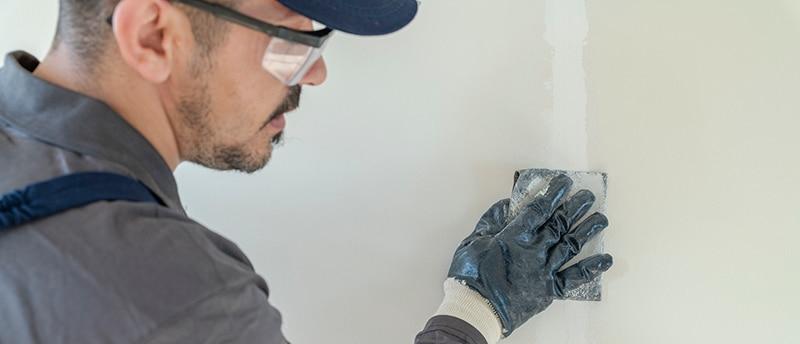
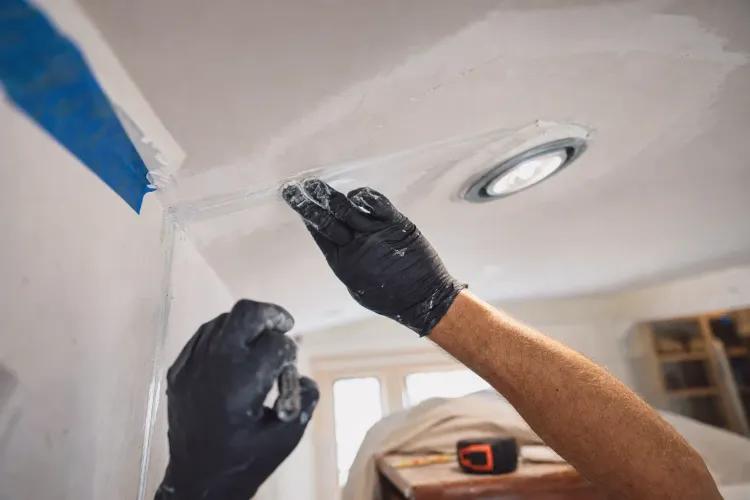
A quick word on scope, because honesty here saves you time. As a Washington-licensed general contractor and handyman, Stanis LLC handles moisture assessments, gutter and downspout maintenance, crawl space encapsulation and insulation, exterior caulking and sealing, repair carpentry for rot-damaged trim and framing, and the drywall repairs that follow a leak, priced at $150 for small patches, $300 for medium repairs, and $500+ for large sections through our drywall repair service. Roofing, repiping, sewer work, and HVAC-integrated dehumidifiers are specialty-contractor trades; we do not perform them, but we can tell you which trade you need and what a fair market bid looks like. Whoever you hire, verify their license through the Washington L&I contractor lookup before signing anything.
The Bottom Line
Water damage prevention in Seattle comes down to a handful of unglamorous habits: keep gutters clear, send water six feet from the foundation, seal the crawl space, watch for leak symptoms, and ventilate the moisture your household creates. Do those consistently and you avoid the vast majority of the rot, mold, and structural repairs that plague homes in this climate.
If you want a professional set of eyes on your home, we are happy to help. Stanis LLC is a Washington-licensed general contractor and handyman serving Seattle, Bellevue, Redmond, Sammamish, Issaquah, Renton, and the surrounding area; you can see our credentials or request an assessment and we will walk the property with you, flag the risks in priority order, and tell you plainly which fixes are DIY, which are ours, and which belong to a specialty contractor.